
Phuket is an island built for doing — for ticking off temples and beaches and markets and islands until the holiday feels like a second job. The cabin is a place built for not doing, and it turns out that takes a different kind of courage entirely.
Everyone who comes to Phuket has a list. Temples to visit, beaches to find, markets to haggle through, islands to hop to. They arrive with itineraries colour-coded by day, spreadsheets shared between partners, screenshots of restaurant recommendations from strangers on the internet. Our guests arrive the same way. By day two, the itinerary is gone.
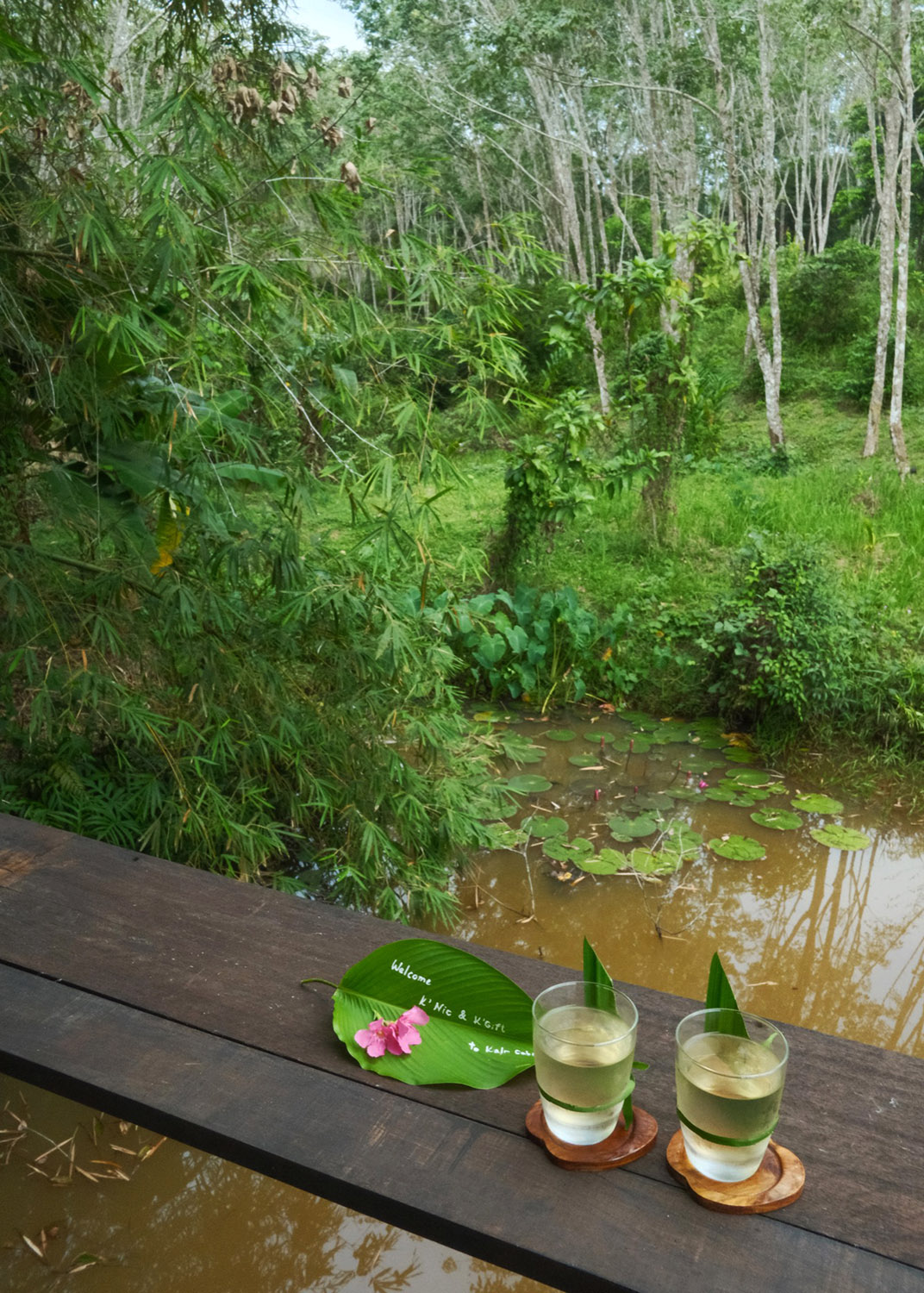
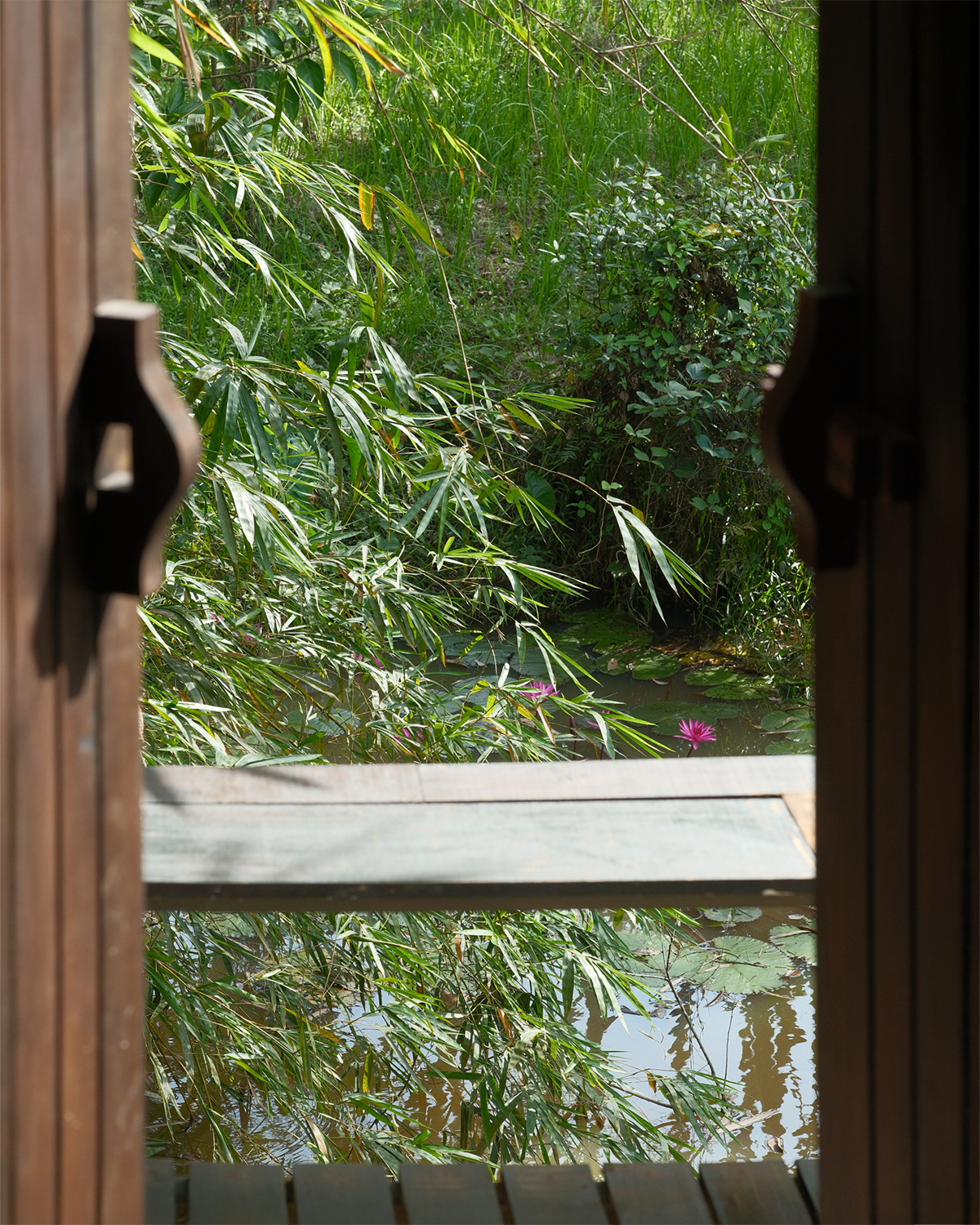
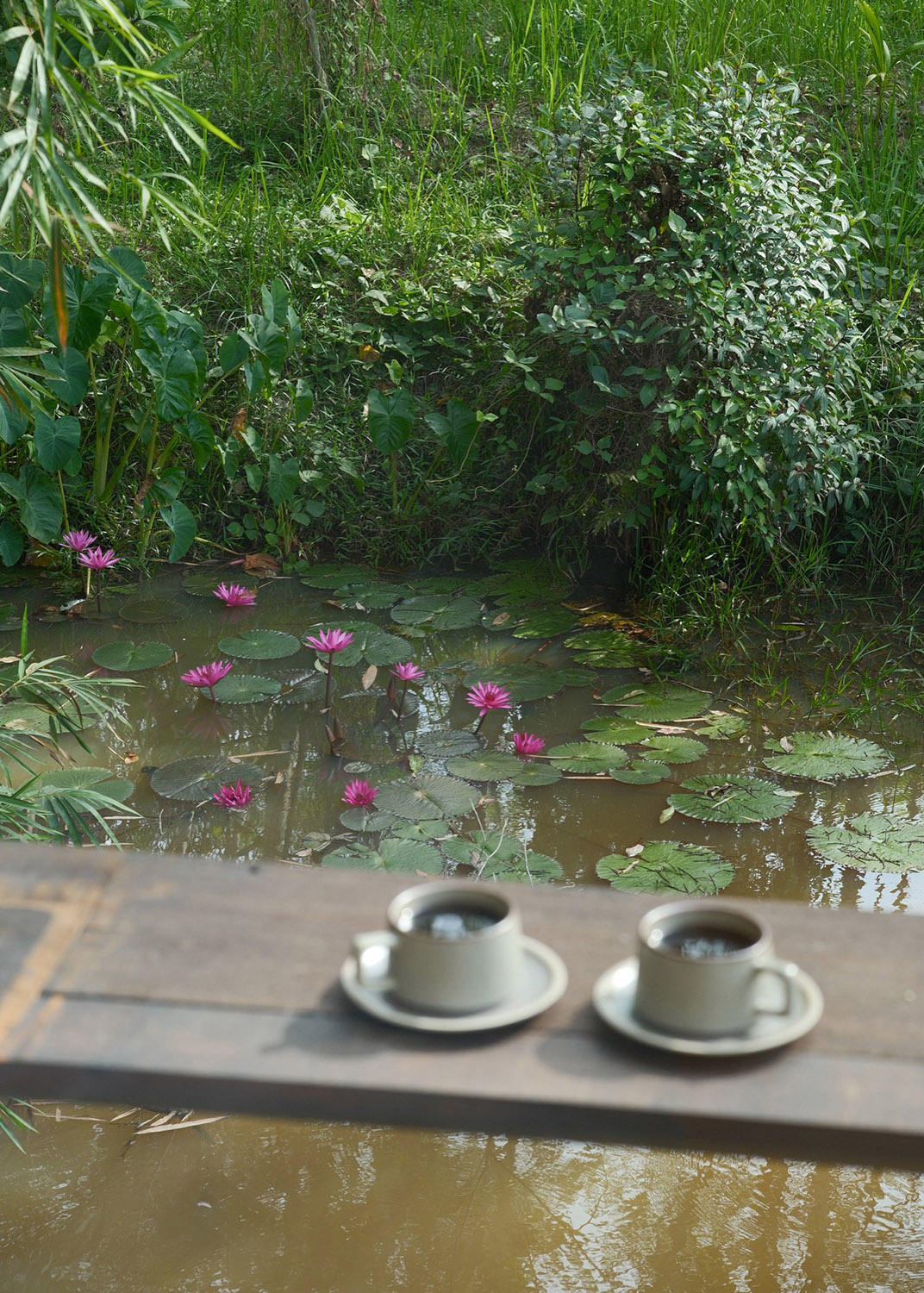
What replaces the plan is harder to describe, because it doesn't have a name. It's the slow discovery that the morning is already half over and nothing has happened except coffee and birdsong and the particular way sunlight moves across the wooden floor. It's the realisation that you've been staring at the lotus pond for forty minutes and that this is not a waste of time but perhaps the first useful thing you've done in months.
Doing nothing requires its own kind of skill. Most people have forgotten how. They arrive with the residue of their routines still clinging to them — the impulse to check a phone, to optimise an afternoon, to feel productive about leisure. The cabin doesn't rush that process. It simply provides the conditions and waits.
The stillness here is not boredom. Boredom is the absence of stimulation. What happens at the cabin is closer to the opposite — a gradual opening of attention to things that were always there but drowned out. The sound of wind through rubber trees. The way a dragonfly hovers above the water. The specific weight of humid air in the late afternoon. These are not small things. They are the things that most of life is actually made of, noticed for the first time because there is finally nothing competing for attention.
The Soaking Tub at Dusk
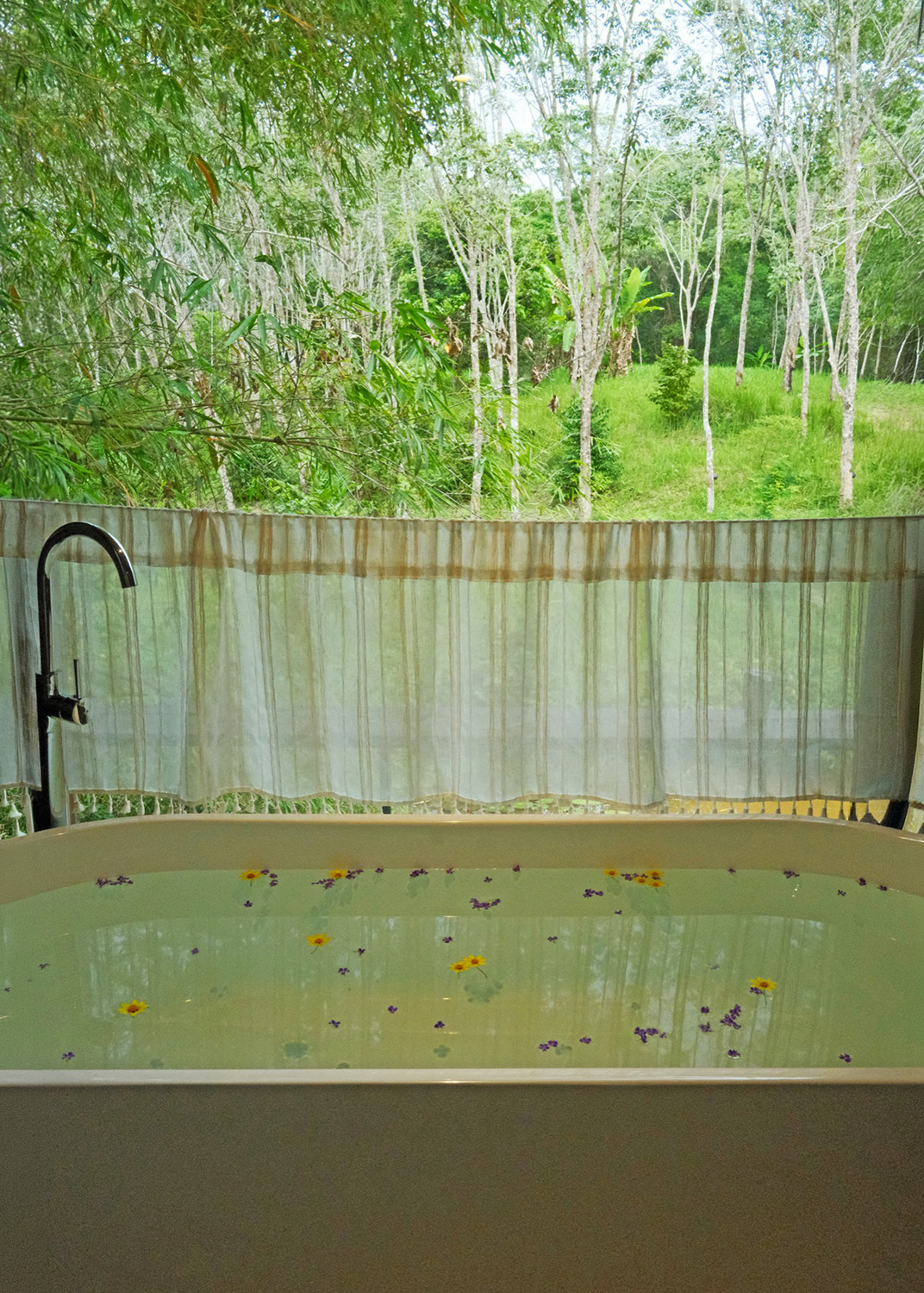
There is a ritual that no guest plans for but every guest remembers. It begins around five in the afternoon, when the heat breaks and the light shifts from white to gold. You draw a bath in the free-standing tub that looks out over the lotus pond. The water is warm. The air is warm. The distinction between the two begins to blur.
Some guests add flowers — frangipani from the tree near the path, jasmine if it's in season. This is a tradition older than any wellness brand, something Thai grandmothers have known for generations. The flowers float on the surface and release their scent slowly, mixing with the smell of wet wood and evening air.
From the tub, you watch the lotus flowers close for the night. It happens gradually, petal by petal, as if they're choosing to do it rather than simply responding to the fading light. The frogs begin their evening chorus — tentative at first, then confident, then overwhelming in the way that only tropical nightfall can be. We positioned the tub for precisely this moment. The angle, the height, the sightline to the water — none of it was accidental. No phone, no music. Just warm water and the last light filtering through bamboo.
The guests who arrive with the longest itineraries are usually the ones who end up staying in the longest.
There is a paradox in the cabin's location that I think about often. Robinson is fifteen minutes away. Boat Avenue is twenty. The airport is thirty. Surin Beach is twenty-five minutes by car. Laguna is just down the road. Everything is accessible. Nothing is necessary. And this is the precise quality that makes staying feel like a choice rather than a constraint. The knowledge that you could go somewhere — could be at a beach bar within half an hour, could be shopping, could be eating street food in Cherng Talay — transforms the act of not going into something deliberate. You are not trapped in stillness. You are choosing it, again and again, because the alternative has lost its pull.
What the Rain Teaches
Phuket rain arrives without apology. It comes sudden and warm, turning the sky from blue to grey in minutes, hitting the roof with a sound that is closer to applause than percussion. At a resort, rain is an inconvenience — poolside plans cancelled, beach days written off. At the cabin, rain is an event.
You hear it before you see it. A change in the wind, a rustling in the upper canopy that moves through the rubber trees like a whisper gathering volume. Then it arrives, and the world shrinks to the space beneath the roof. The terrace becomes the only place that matters. You sit and watch it fall on the pond surface, each drop a small circle that expands and intersects with others until the water is a shifting geometry of rings.
The smell is extraordinary — wet earth and rubber bark and something green and mineral that has no name in English. It lasts twenty minutes, sometimes forty, rarely more than an hour. And when it stops, the quiet that follows is different from the quiet that came before. It is a cleaned quiet, a reset. The birds return. The air is ten degrees cooler. Everything glistens. It is as if the afternoon has been given a second beginning, and this time you are paying closer attention.
The Reviews Tell the Story
I read every review that guests leave, and what strikes me is how rarely they describe activities. They do not write about things they did. They write about how they felt. "Completely switched off," one couple wrote. "The reset we didn't realise we needed," said another. "Profound quiet." "Never slept so well." "A little slice of heaven."
These are not descriptions of experiences. They are descriptions of absence — the absence of noise, of obligation, of agenda. The absence of the constant low hum of modern life that most people have stopped noticing because it never stops. What the cabin offers is the stopping, and it turns out that is the rarest amenity of all.
The cabin accommodates just two guests — couples, mostly, or solo travellers seeking something they cannot quite articulate until they find it. This scale is deliberate. Intimacy requires limits. The feeling of having a place entirely to yourself, of hearing no other voice, no other footstep, no other door — this cannot be manufactured at scale. It can only be offered in small doses, to people who are ready for it.
We did not build the cabin for people who want to "do Phuket." We built it for people who have already done it, or who never wanted to. People who understand that the most valuable thing a place can offer is not an experience but permission to stop having them.
The itinerary for a stay at Kalm Cabin is simple. Wake up. Listen. Be warm. Watch the light change. Let the hours pass without counting them. It is the kind of programme that looks like nothing on paper and feels, by the end, like everything.