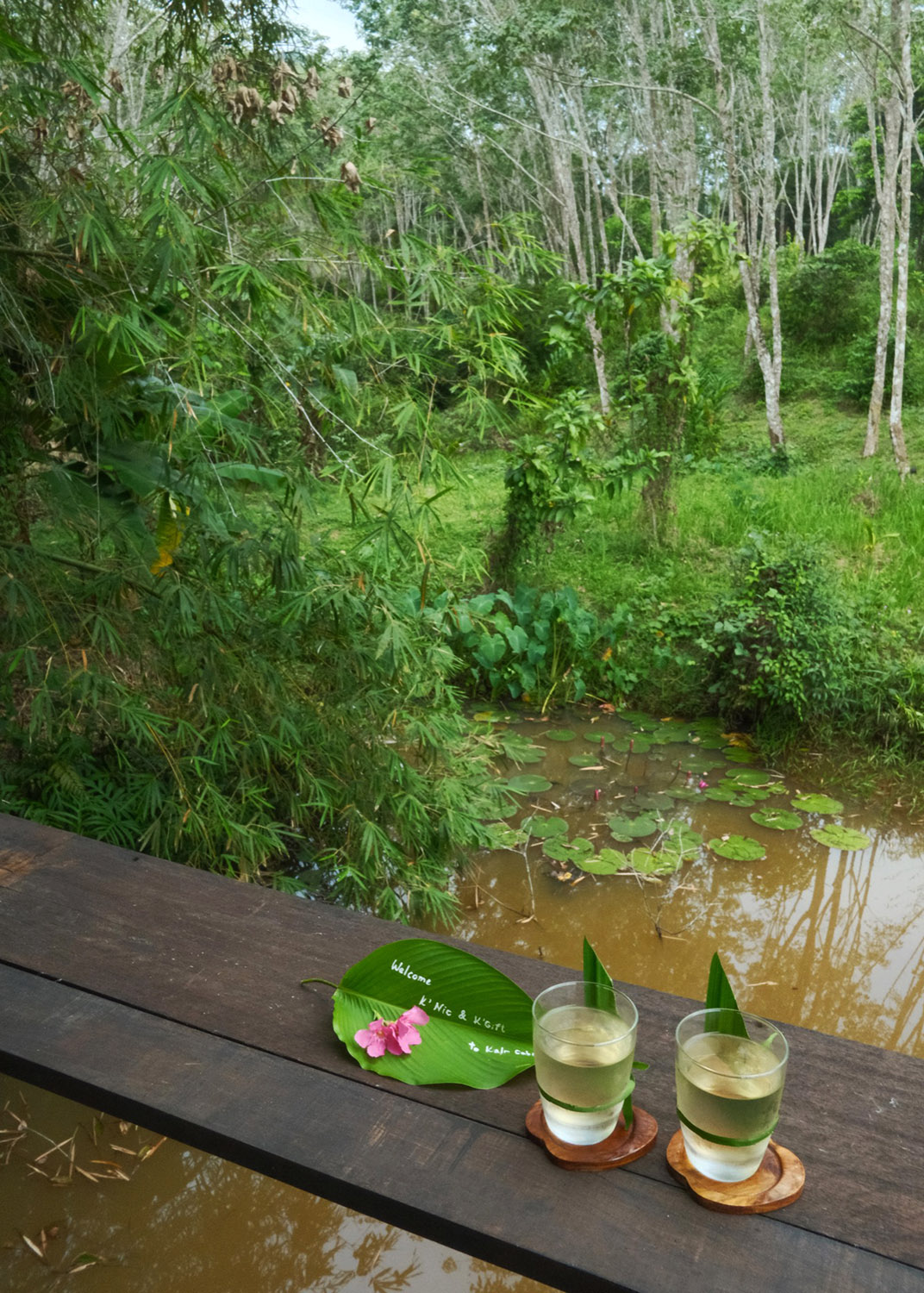

The best architecture in the tropics is the kind that knows when to get out of the way. A roof that shelters without enclosing. Walls that open more than they close. A structure that defers to the land beneath it rather than attempting to dominate it.
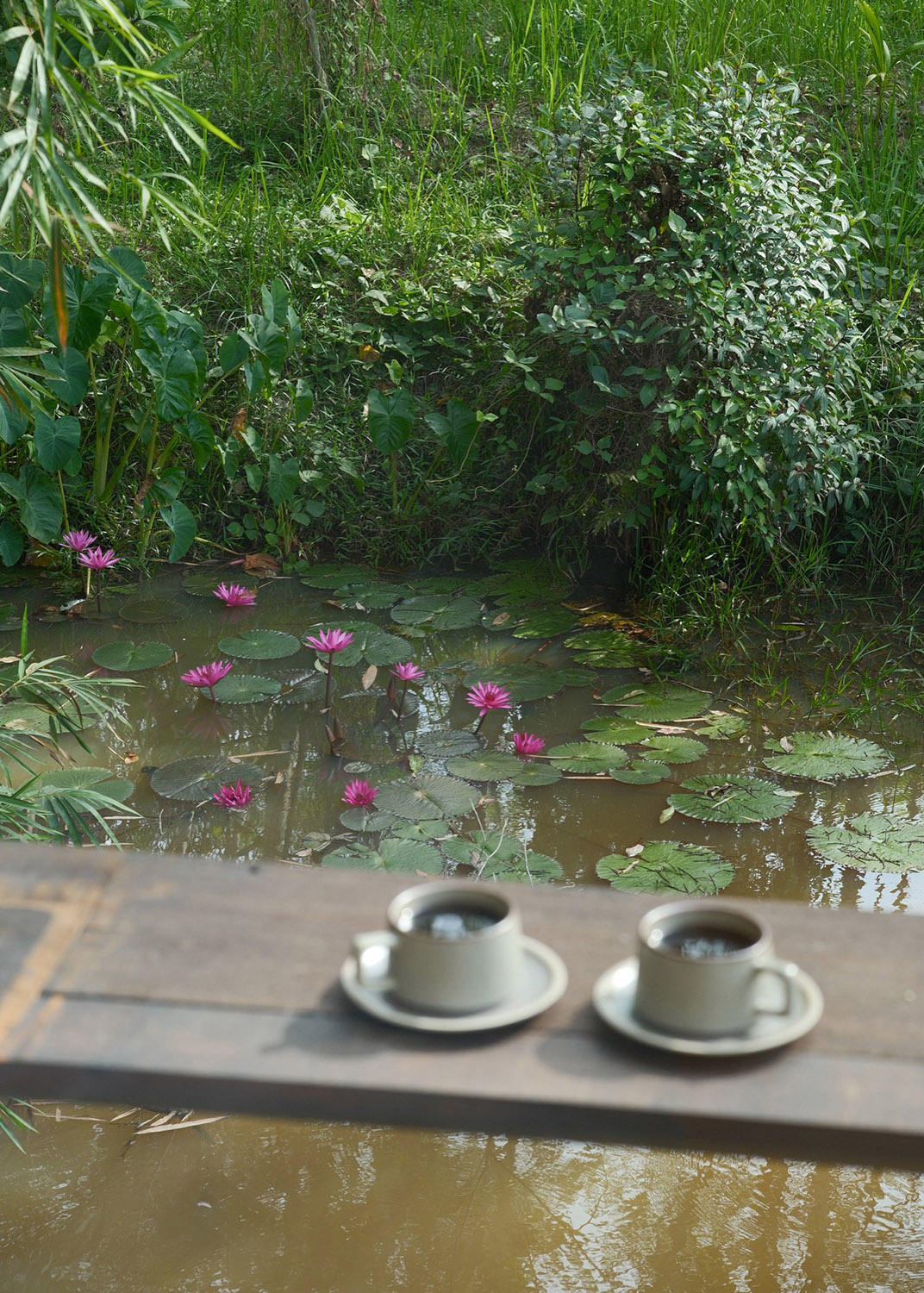
When we first walked the land in Si Sunthon, the instinct was to clear it. That is what everyone does in Phuket — level the site, pour concrete, build a box with a pool. We considered it for about a day before deciding to do the opposite. The rubber trees had been here for decades. The bamboo had grown thick enough to filter the afternoon light into something soft and green. The lotus pond sat at the centre of the plot like a quiet argument against doing anything too dramatic. We decided to listen.
The decision to build with wood instead of concrete was not romantic. It was practical, in a way that only becomes clear once you have spent enough time in the tropics. Wood breathes. It absorbs humidity instead of trapping it. It ages with the weather rather than cracking against it. And it carries the smell of the forest even after it has been shaped, sanded, and finished — a warmth that concrete will never have, no matter how much you spend on it.
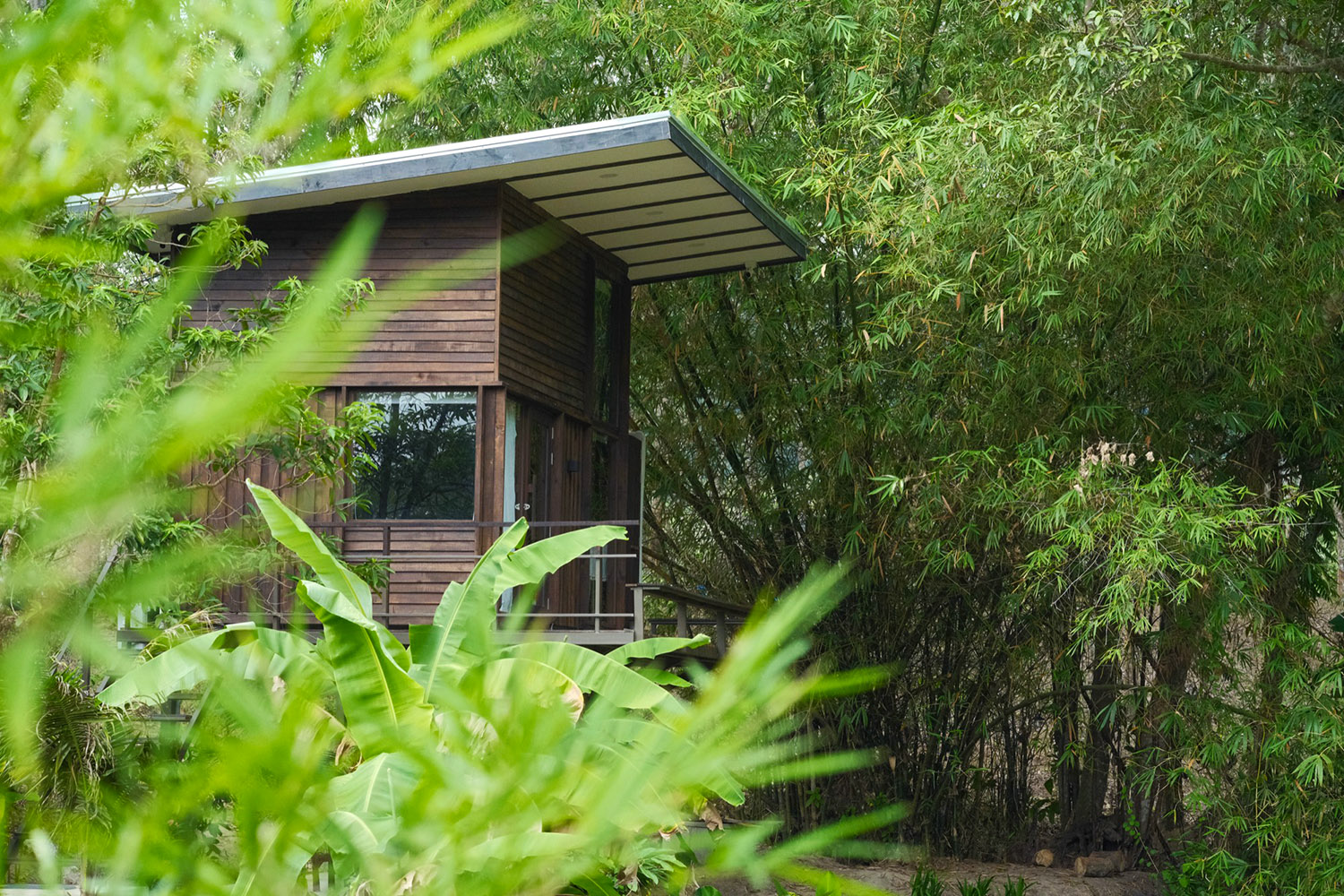
The rubber plantation shaped everything. Rather than drawing a footprint and clearing whatever fell inside it, we walked the site and let the trees dictate where the cabin could go. The large rubber tree to the east stayed. The cluster of coconut palms to the south stayed. The bamboo grove that screens the western sun — that stayed too. The cabin was designed for the gaps between them, slotted into the canopy like a piece that had always been missing.
Building on Stilts
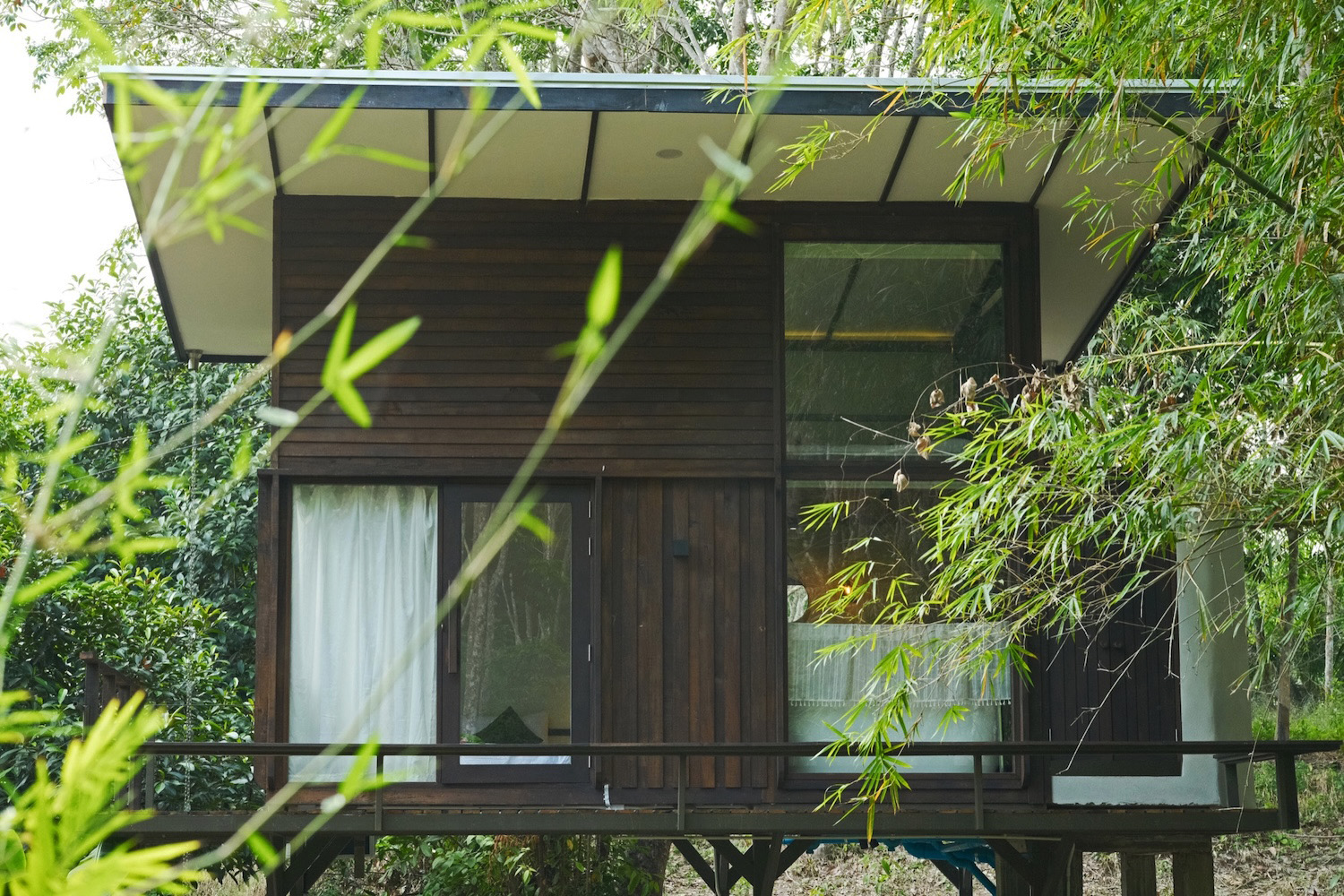
Raising the cabin on stilts was one of the earliest decisions, and one of the most important. Practically, it solves the monsoon problem. When the heavy rains come between May and October, the water moves across the land rather than pooling against foundations. The stilts let it pass underneath, the way it always has, without disrupting the drainage patterns the forest established long before we arrived.
But the stilts do something else — something harder to quantify. They create a breeze corridor beneath the cabin that keeps the ground floor cool even in the hottest months, when the air above the road shimmers and the concrete villas down the hill run their air conditioning around the clock. The elevation also gives the terrace its particular quality. You are not looking at the lotus pond from ground level. You are looking across it, through the leaves, at the height where the canopy begins. The feeling is closer to a treehouse than a house. Suspended, quiet, apart.
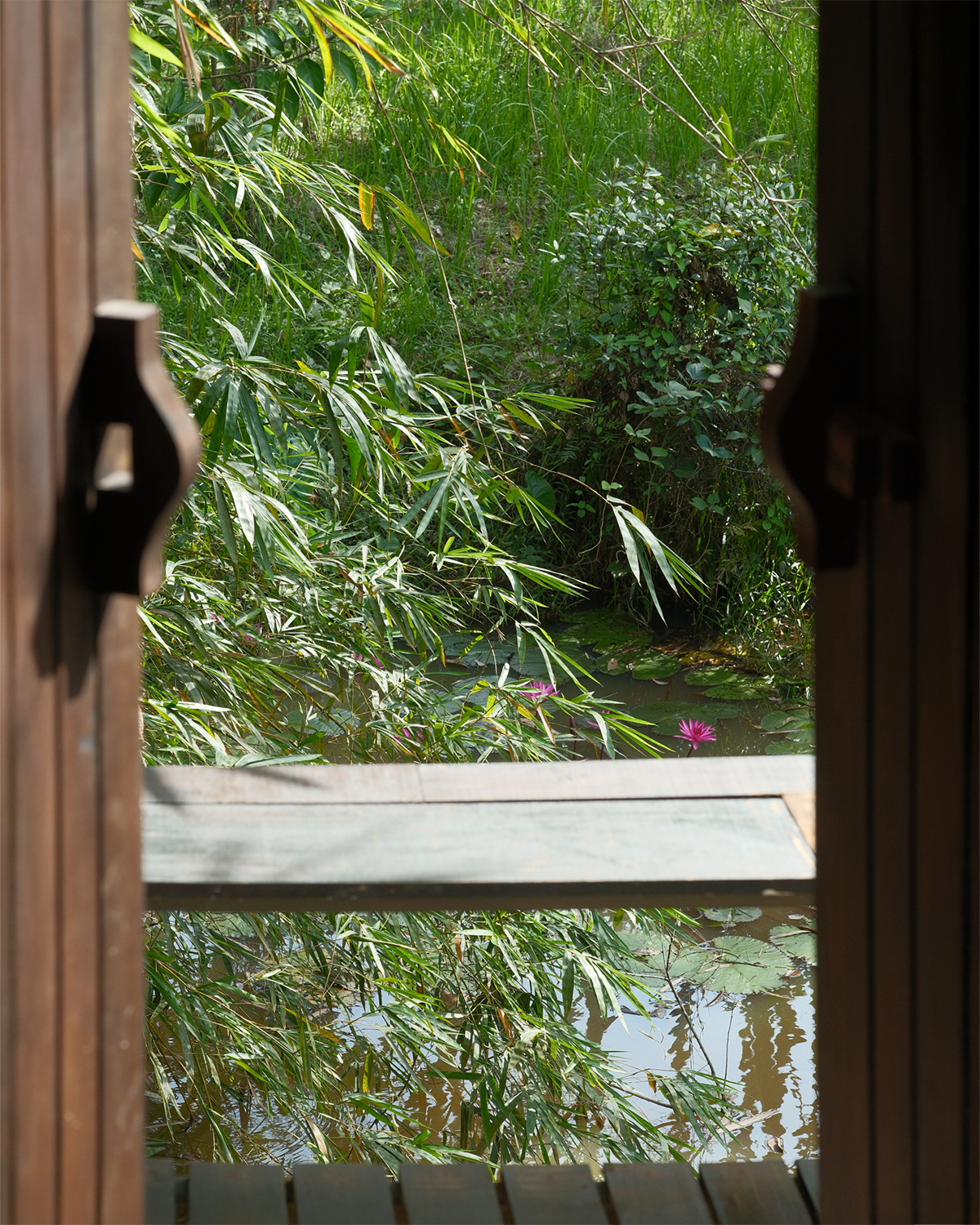
Every window should frame something green. No neighbouring roofs, no construction sites. Just leaves, water, and sky.
The window placement was deliberate to the point of obsession. Every opening was positioned to capture a specific view. The floor-to-ceiling glass on the eastern wall frames the lotus pond and the morning light that crosses it. The smaller window above the bed looks into the bamboo grove, so the last thing you see before sleep is green. The terrace doors open wide enough to dissolve the boundary between inside and out — when they are open, the cabin is not a room with a view but part of the view itself. Natural ventilation was designed in from the start, cross-breezes moving through the space so that even on warm days the air feels alive rather than stagnant.
Water as Architecture
The outdoor shower was not in the original plans. It emerged from a simple observation: standing under running water while surrounded by plants and open sky is a fundamentally different experience from standing in a tiled cubicle. We built it open to the air, screened by foliage, with a view upward through the palm fronds to whatever the sky is doing that day. It is one of those small decisions that changed the way the cabin feels.
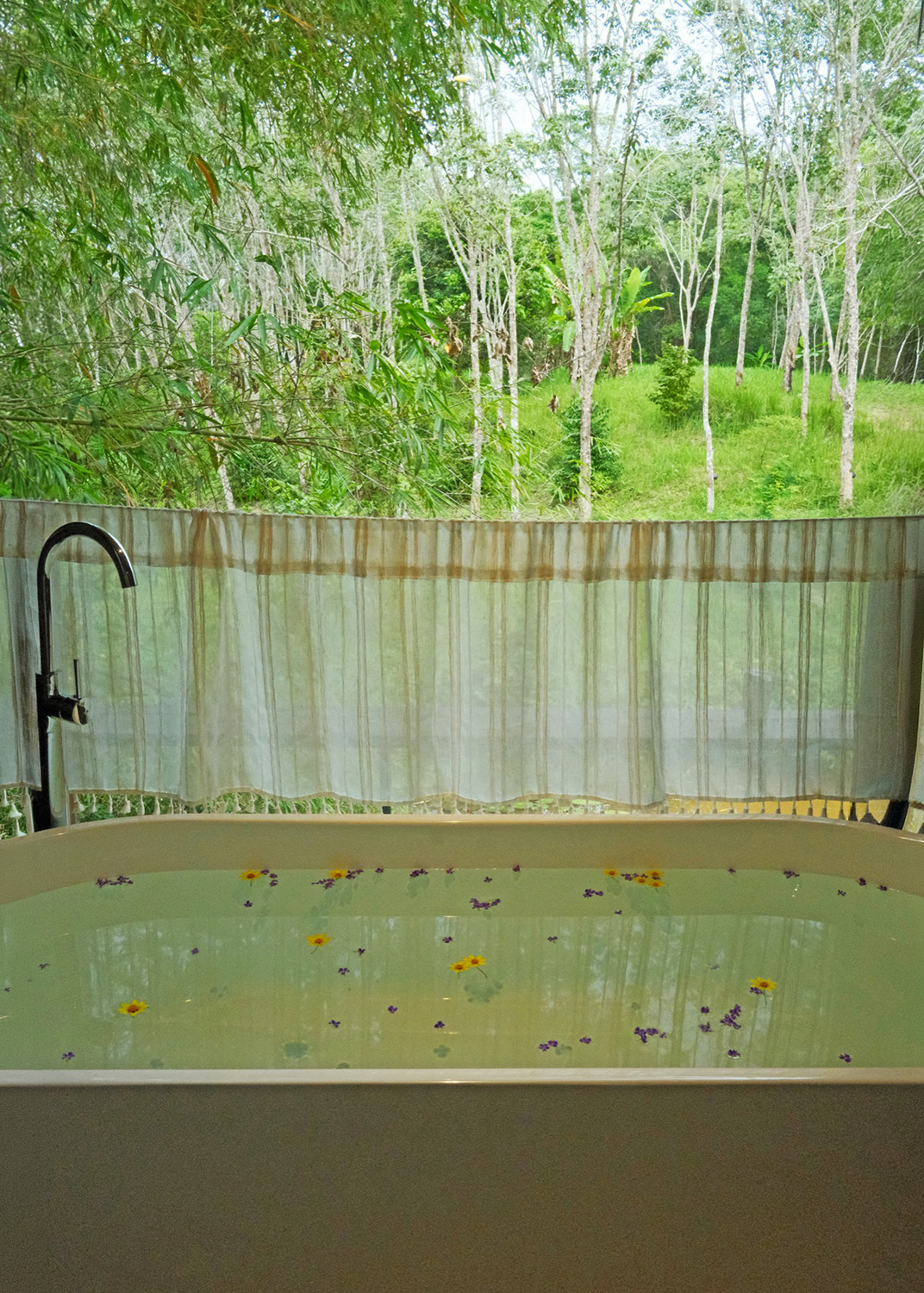
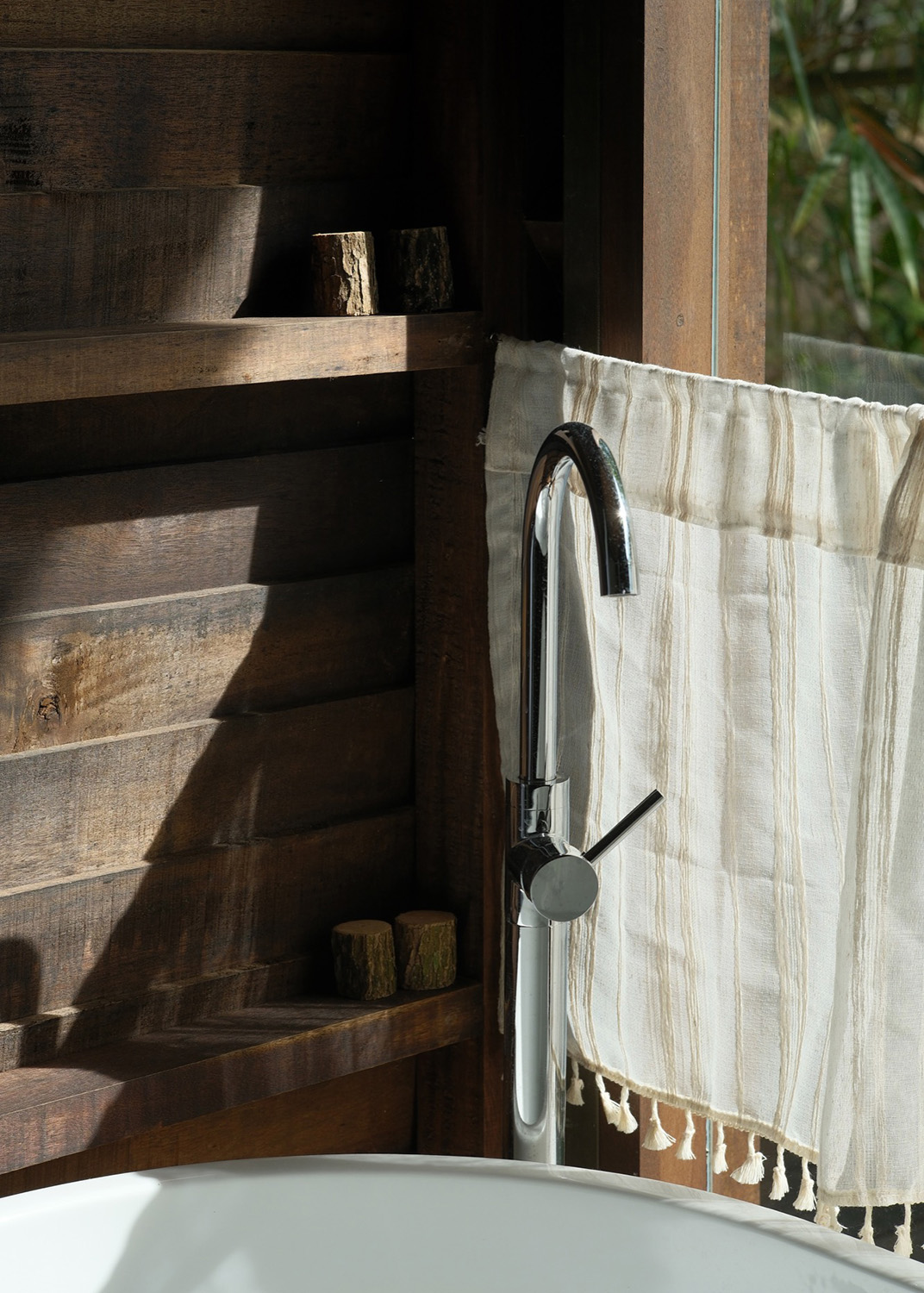
The free-standing soaking tub was positioned to overlook the lotus pond — not because it photographs well, though it does, but because the pond is the calmest thing on the property. Sitting in warm water at dusk, watching the lotus flowers close for the night while the frogs begin their evening chorus, is the kind of moment that changes the rhythm of your breathing. The water features here are not additions to the design. They are responses to what was already present. The pond existed before the cabin did. The rain falls whether we build a roof or not. The shower and the tub simply acknowledge that water was always the centre of this place.
Aging Gracefully
Most buildings in Phuket fight against time. They are painted, sealed, pressure-washed, and repainted in an endless cycle of maintenance designed to make them look the same year after year. We chose a different approach. The materials in the cabin were selected not for their resistance to aging but for the way they age. The wood is darkening. The patina is forming. The surfaces are acquiring the kind of character that only comes from weather, use, and the slow passage of seasons.
There is a difference between a building that is maintained and one that is preserved. Maintained means cared for — cleaned, repaired when needed, kept in good working order. Preserved means frozen, locked in the state it was in on the day it was finished. We are interested in the former. The cabin in five years will not look the way it looks today. It will look better. The bamboo around the terrace will have grown taller. The vines on the eastern trellis will have thickened. The wood will have deepened in colour. A building that becomes more itself with time rather than less — that was the goal.
We keep the cabin for two guests only. That is not a limitation of space but a decision about scale. This was designed for intimacy, not occupancy. Two people, a small footprint, a cabin that sits lightly on the land. The proportions only work because we kept them modest.
The cabin is not an architectural statement. It is not trying to win awards or appear in magazines. It is a response to a question we asked ourselves at the very beginning: what does a building look like when it is designed for the land instead of against it?
We think it looks like this — wood and glass, lifted above the earth, disappearing into the trees. A place where the forest comes right up to the walls and, when the doors are open, walks inside.